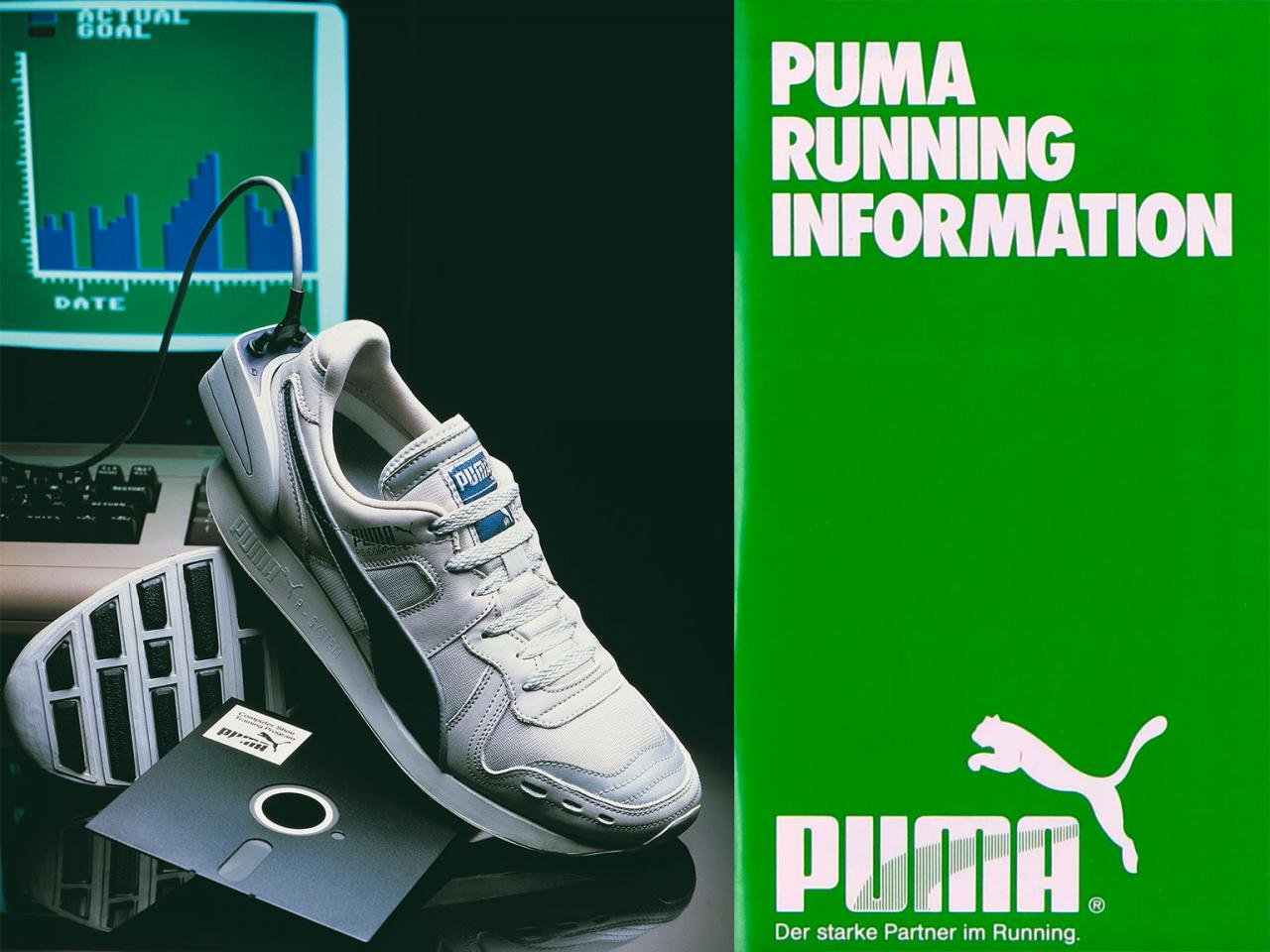
In 2018, PUMA reissued what it cheerfully called the nerdiest shoe it had ever made. The joke only works because the original was not a joke at all. In 1986, PUMA built a running shoe that tracked your runs and plugged into your home computer, and it meant every word of it.
The RS-Computer, the RS standing for Running System, hid a chip in the heel that logged your distance, your time, and an estimate of the calories you had burned. To read any of it, you ran a sixteen-pin cord from the back of the shoe into an Apple IIe, a Commodore 64, or an IBM, and your run appeared on a screen as numbers and charts. In 1986. Before the web, before the smartphone, before anyone had said the word wearable, PUMA shipped a shoe that did the one thing every fitness device on earth does now.
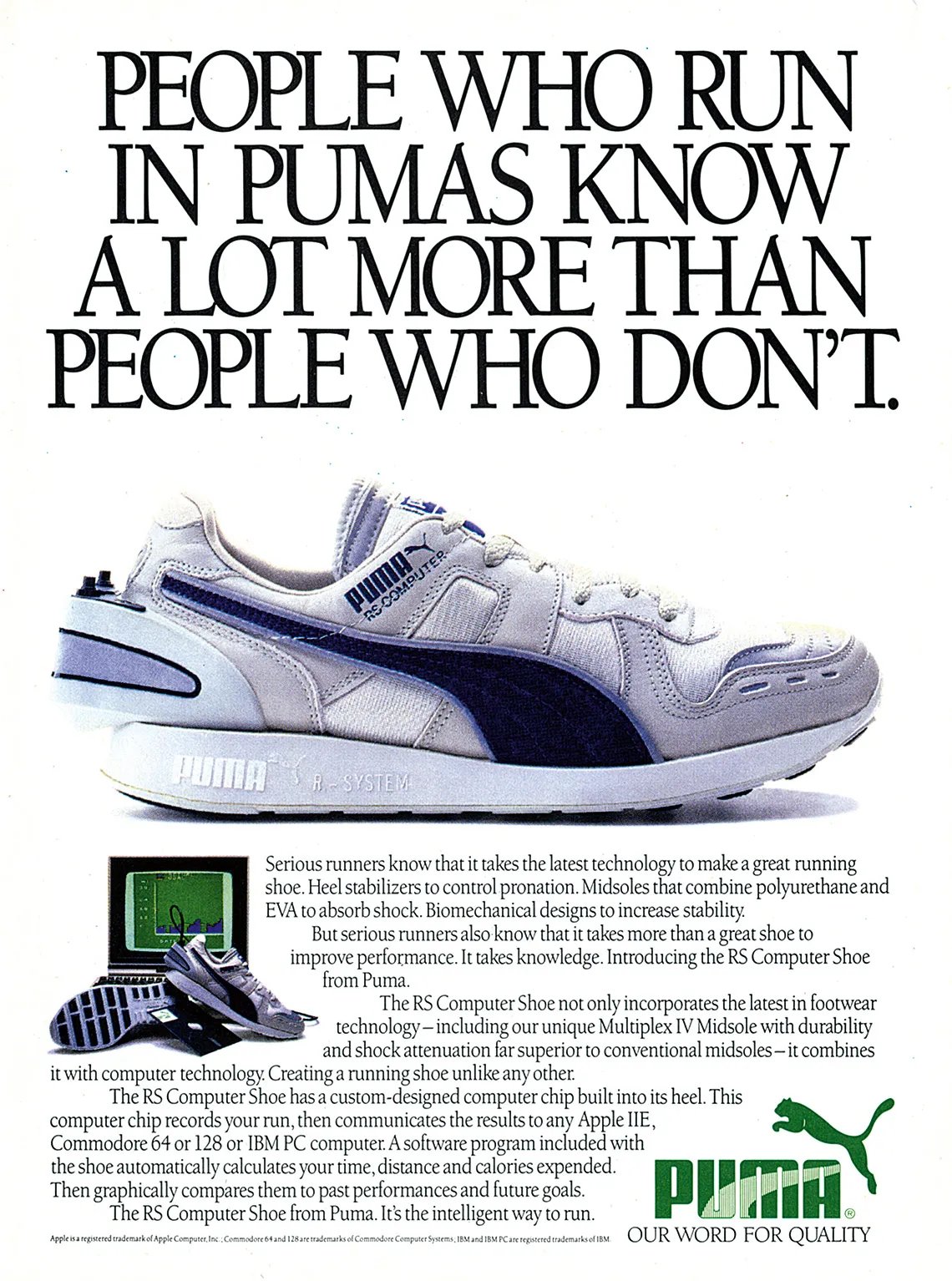
You have to sit inside the moment to understand the nerve of it. The mid-1980s was the first time the personal computer felt inevitable rather than exotic. Machines were landing in living rooms, and there was a real belief that everyone would soon own one and would want to plug their lives into it. PUMA looked at that and made a logical, slightly insane leap. If the runner is going to own a computer, the runner is going to want their running in it. So PUMA put the data collection where the running actually happens, on the foot, and trusted the rest to catch up.
It did not sell. Of course it did not sell. It was expensive, the cord was clumsy, the experience asked a lot of a person who just wanted to go for a jog, and the hardware around it was nowhere near ready to make the idea feel effortless. By every commercial measure the RS-Computer was a flop, and that is exactly why it is one of the most interesting shoes PUMA ever produced.
The industry remembers the shoes that sold. It builds its canon out of winners, out of the Suedes and the Air Maxes, the products that found their moment. The RS-Computer never found its moment because its moment had not been invented yet. Everything that came later, the Nike+ chip, the Fitbit, the running watch, the Apple Watch closing its rings, is the RS-Computer’s idea, finally made painless by thirty years of hardware the 1986 version could only dream about. PUMA was not wrong. PUMA was early, which in product terms is its own specific way of being right and getting nothing for it.
The 2018 reissue understood the joke and the pride underneath it. Same silhouette, same chip in the heel, except now it charges over USB and talks to a phone over Bluetooth, the way the original would have if the original had been allowed to be born in a kinder decade. It was a tiny run, a collector’s wink, a brand tipping its cap to its younger self for seeing the future a little too clearly.
That is the part worth keeping. We tend to score sneaker history on sales and hype, on what moved units and what broke the internet. But some of the most honest work a brand ever does is the swing that misses because it arrived before the world was ready to catch it. The RS-Computer is PUMA at its most quietly visionary, a company that looked at a running shoe in 1986 and saw a computer you wear, and was willing to be laughed at for it. Everyone is wearing one now. PUMA just got there first, and waited.