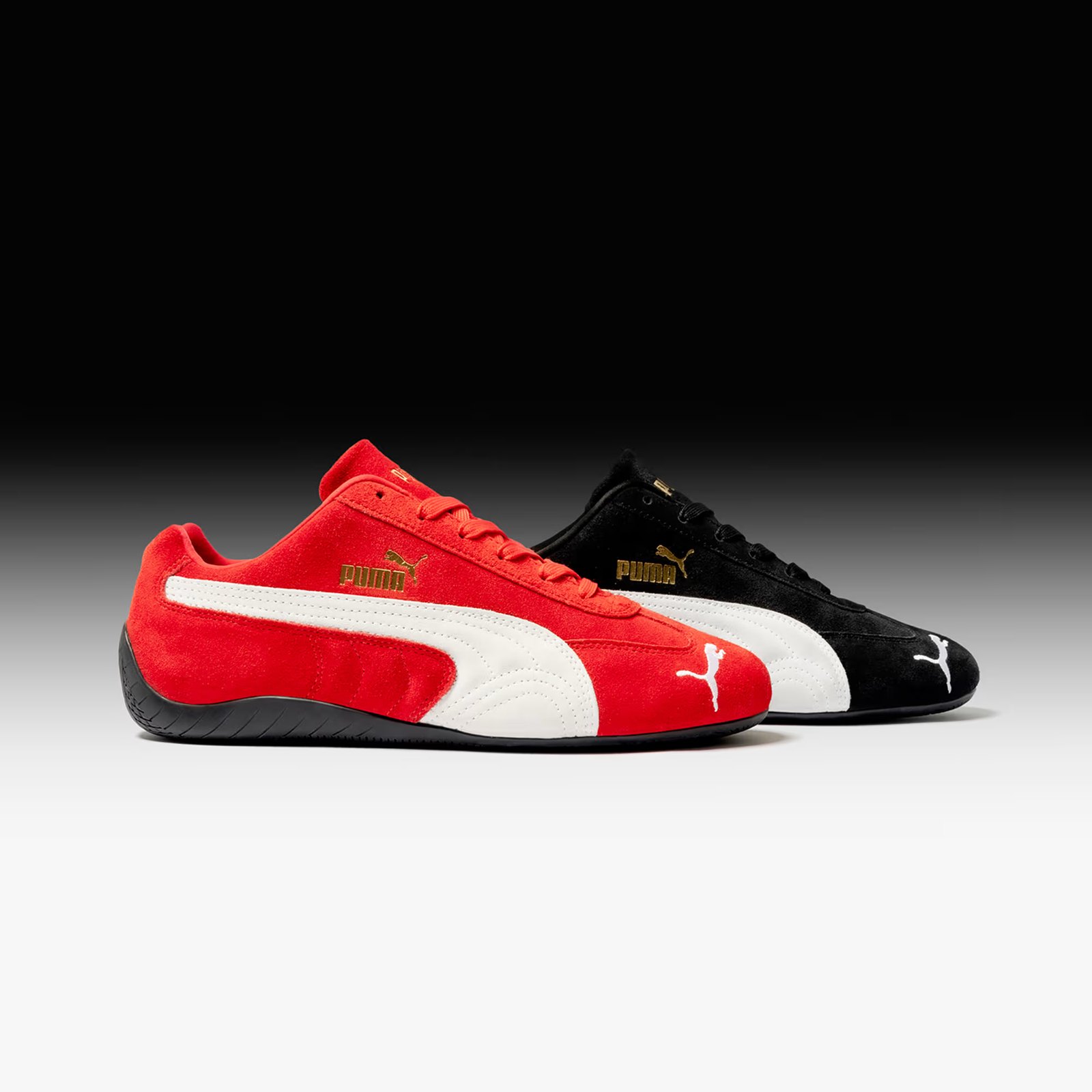
Right now the PUMA Speedcat is everywhere. It is on the feet of people who have never watched a lap of racing in their lives, in ballet-flat versions and mesh versions, on front rows and for-you pages, sold as the clean, low, slightly anonymous answer to a decade of chunky sneakers. The way it gets talked about, you would think PUMA invented it last summer.
It did not. The Speedcat is more than a quarter century old, and the part of its story worth telling is the part the revival skips. This shoe did not start as a fashion object. It started as safety equipment, made one pair at a time, for men who drove cars at speeds that occasionally killed them.
Before the sneaker, there was the boot
Go back before the sneaker. Since the 1980s, PUMA had been quietly building specialized shoes for Formula 1 drivers, names like Stefan Bellof, Christian Danner, Manfred Winkelhock, Gerhard Berger and Hans-Joachim Stuck. These were not products. They were never in a catalogue, never on a wall, never available to you or me. Each pair was tailored to a specific driver, in collaboration with that driver, because a racing shoe has a job that has nothing to do with how it looks. It has to give a man the feel of a pedal through a fireproof sole while the rest of the car tries to come apart around him. That is the lineage. Not lifestyle. Survival.
The shoe that became the Speedcat traces to one of those drivers in particular. When PUMA went looking for the template, the design PUMA’s own archive points to is Stefan Bellof’s 1984/85 model. If you know the name, you know why that lands the way it does. Bellof was one of the most prodigiously gifted drivers of his generation, the kind people still argue would have been a multiple world champion, and he died in 1985, racing, before any of it could happen. The best-selling sneaker PUMA has ever made is built on the shoe of a driver who did not live to turn thirty. That is not a detail a brand puts on a hangtag. It is the detail a sneaker history site exists to say out loud.
1998, 1999, and a brand that disagrees with itself
The sneaker itself arrives at the end of the nineties. PUMA’s own history dates the fireproof Formula One version of the Speedcat to 1998, built for racing drivers, the same stretch in which PUMA was deepening the Formula 1 program it still runs today. The people around it, board member Martin Gänsler, designer Rudi Hieblinger and the agency Création & Focus Design, worked with the Italian racing-gear maker Sparco, and the first Speedcat boots were the real thing, premium calfskin or kangaroo leather with a fireproof lining, made to be driven in, not posed in. PUMA’s later retrospective dates this step to 1999 rather than 1998, one of those small disagreements a brand’s own archive sometimes carries with itself. Either way, the boot is a creature of the late nineties.
Then came the move that actually mattered, the one that turns a piece of racing equipment into one of the most-sold sneakers on earth. At the turn of the millennium, PUMA launched a lifestyle version. They took the fireproof lining out. They swapped the hard racing leather for suede. They kept the low cut and that famously thin sole, the one that sits you almost on the ground, and from 2002 they stitched the embroidered PUMA cat onto the toe. What had been a tool for a handful of professionals became a shoe anyone could buy, and the thing that made it work as fashion was exactly the thing that made it work as equipment. Low, light, close to the road. A racing shoe’s whole brief, sold as a silhouette.
It worked beyond anyone’s projection. PUMA’s own number is more than 28 million pairs, which the brand calls its best-selling sneaker, and for most of the 2000s the Speedcat was a genuine European street staple before the rest of the world caught up. Then, around 2010, PUMA more or less let it go quiet. It took a decade-long break, which in hindsight reads less like neglect and more like a shoe being allowed to become old enough to be wanted again. The return came in 2024, and it returned into a moment that was ready for it, a sneaker world finally tired of bulk and reaching for something flat and fast and a little severe. It returned with its racing credibility intact, too, still worn in the Formula 1 paddock by PUMA champions like Lewis Hamilton, the rare shoe the grid and the front row wanted at the same time.
Heritage with names attached
While every brand on the planet sells you “motorsport heritage” as a mood, the Speedcat is worth understanding differently. Its heritage is not a mood. It is specific, and it is human, and it has names attached to it. The thin sole you like is there because a driver needed to feel a brake. The low cut you like is there because a racing shoe cannot be tall. The suede is the one part that is purely cosmetic, the concession the shoe made to leave the track. Everything else about why this thing feels good on your foot is a decision someone made for a man trying to win, or just survive, a Grand Prix.
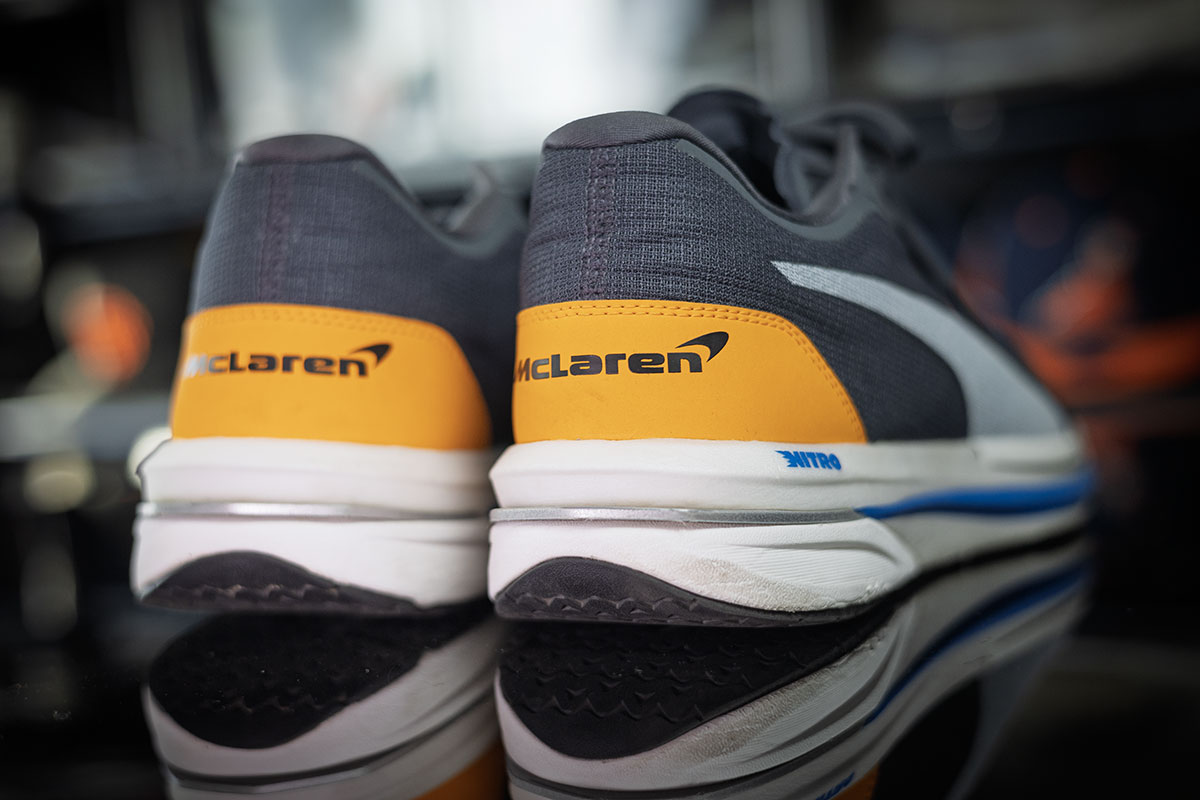
That is what the revival flattens. A shoe like this gets reduced to “Y2K is back” and “F1 is cool now,” and both of those are true and both of them miss it. The Speedcat is not popular because of a nostalgia cycle. It is popular because it was designed correctly the first time, for a purpose that demanded it be designed correctly, by people who were solving a real problem for real drivers, including one who became the quiet ghost in the whole story.
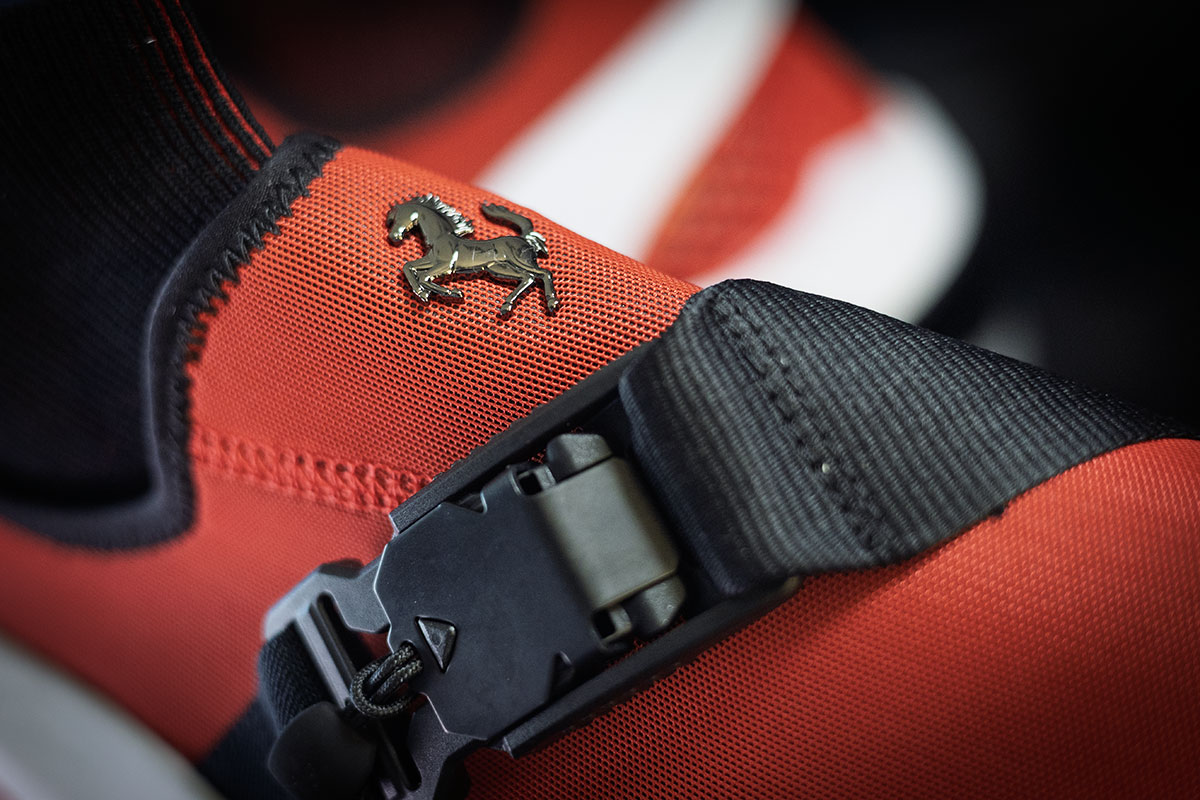
The shoe outlived the men it was built around. Bellof has been gone forty years. The bespoke boots that came before the Speedcat never sold a single pair. And yet the silhouette they produced is, right now, on more feet than almost anything PUMA has ever made. That is what a great product does when it comes from a real place. It carries the people forward, long after the moment that made it has passed. You do not have to know any of this to like the shoe. But it is a better shoe to own once you do.