How the NBA’s dress code opened the floodgates, and what a new players’ union initiative might bring back.
There’s a thing about sneakers I miss, and I’m not sure most people noticed it leave. It went quiet around 2018. A piece of news this week made me think the door might not be shut all the way.
It starts with a catalog. Specifically, the Eastbay catalog, which I got to know pretty well when I built the first blog the company ever had, trying to bring all that catalog history into the digital age. I was close to those pages in a way most people weren’t. I knew which colorways were available by team, which shoes you could customize with your name and number, and which non-signature performance models were sitting in six Bulls colorways and four Pistons colorways, waiting for someone with a $60 budget and a dream to fill out an order form and wait three weeks for the box to show up.
That world is gone. And most people haven’t noticed.
Maybe I’m biased as a Sacramento Kings fan. Purple isn’t exactly a colorway brands are rushing to put on general releases. But when players had PEs in team colors, Kings fans had a real shot at getting a shoe in that purple and black that would have never existed otherwise. The team colorway was often the only path to a color combination your city actually wore. When that visual connection disappeared, so did that version of fan ownership.
Why team colorways used to matter
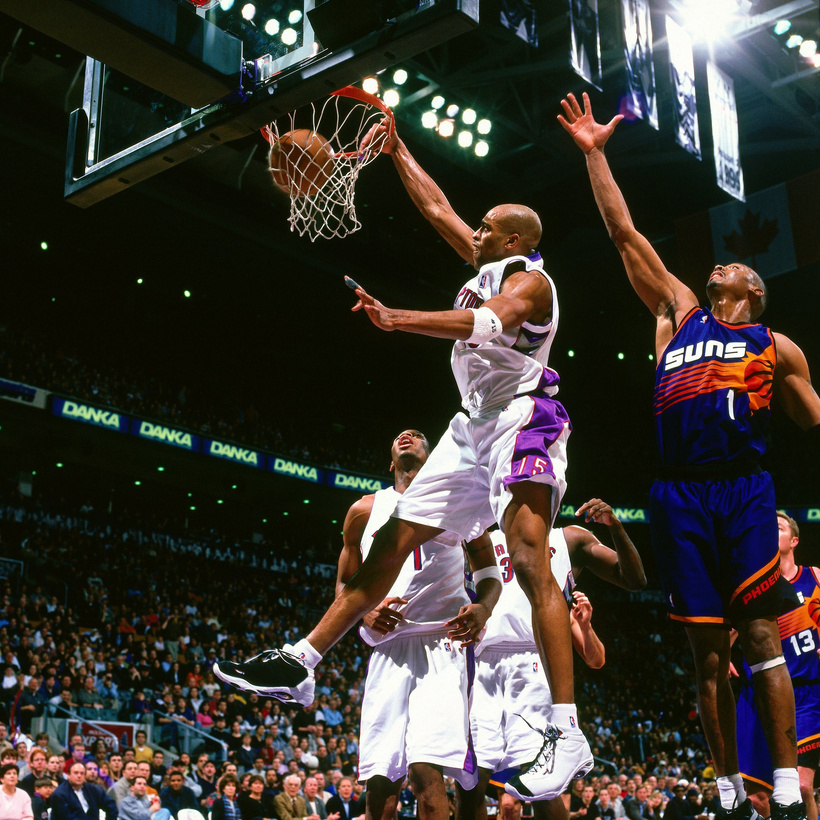
Before the rule change, NBA footwear operated with a specific visual logic. For most of the league’s history, shoes had to be predominantly white or black with minimal team color accents. By the late 2000s, full team color shoes were allowed, meaning the Bulls could wear all red, the Celtics all green, and so on. The rules were structured, but within that structure something interesting happened: every player on the floor was visually connected to the same identity.
That connection mattered most for the non-signature player. When your favorite non-star was lacing up a Hyperdunk or a Zoom BB or a LeBron team colorway PE, the shoe told a story. It said this player is a Celtic, a Laker, a Spur. It anchored an otherwise anonymous shoe to a specific team history, a specific era. The colorway was the narrative because the player didn’t have one of his own yet, at least not at the shoe level.
The Eastbay catalog understood this intuitively. You could flip through dozens of pages and find the same Nike or Reebok or adidas performance basketball model available in 15 different team color combinations. As Deadspin noted in their Eastbay retrospective, the catalog even had ways to outfit entire basketball teams in the same shoe, ordered in virtually any color combination. That wasn’t just a retail mechanic. It was a visual ecosystem. The shoe you wore connected you to the team you loved, whether you were playing in it or watching from the stands.
You could even go further than that. Certain models in the catalog let you customize with your name, your number, your initials. A non-signature performance basketball shoe in Kings purple with your name on the heel wasn’t a fantasy, it was a Tuesday afternoon order form. That version of personalization, built around team identity rather than individual star power, created a category of sneaker stories that has almost entirely disappeared.
What the 2018 rule change actually cost
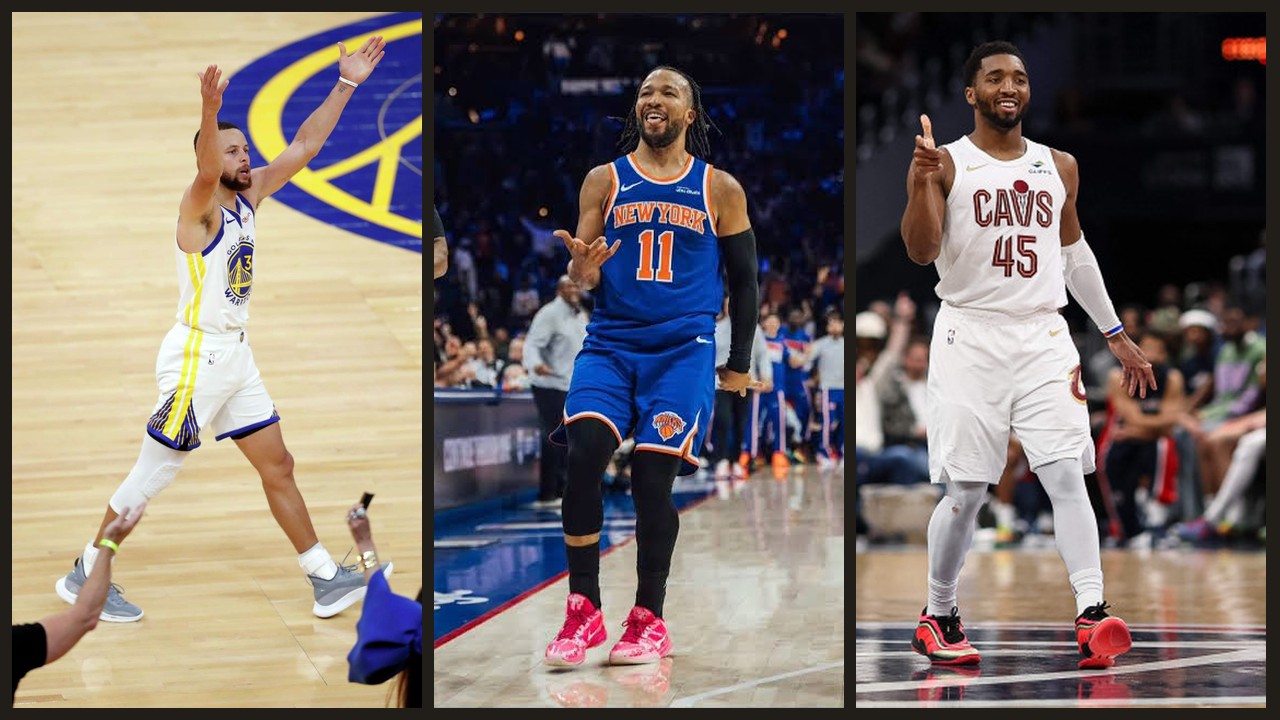
The NBA’s decision to lift all footwear color restrictions ahead of the 2018-19 season was framed as player empowerment. And it was, in the narrow sense. Players could wear anything, any color, any time. The creativity that followed was real. Vintage colorways started showing up on court. Personal expression expanded. The sneaker community had new things to talk about every week.
But the side effect nobody accounted for was what happened to the shoes that weren’t attached to a star. When every player could wear anything, the visual logic of the team colorway evaporated. There was no longer a reason for a brand to develop a deep bench of team-specific makeups for a non-signature model. The guy at the end of the bench was wearing whatever he wanted anyway. The connective tissue between the shoe, the player, and the city quietly came apart.
The performance mid-market felt this most. Shoes like the Nike GT Cut, which has become one of the most widely worn non-signature models in the NBA today, get plenty of retail colorways. Gradient runs, general release color stories, the occasional PE for a player like Jordan Poole. But the deep team color library that once existed for models at this tier is largely gone. There’s no reason for a brand to build out 30 team-specific makeups when the players wearing those shoes aren’t required to connect visually to anything.
The shoes are great. The stories are missing.
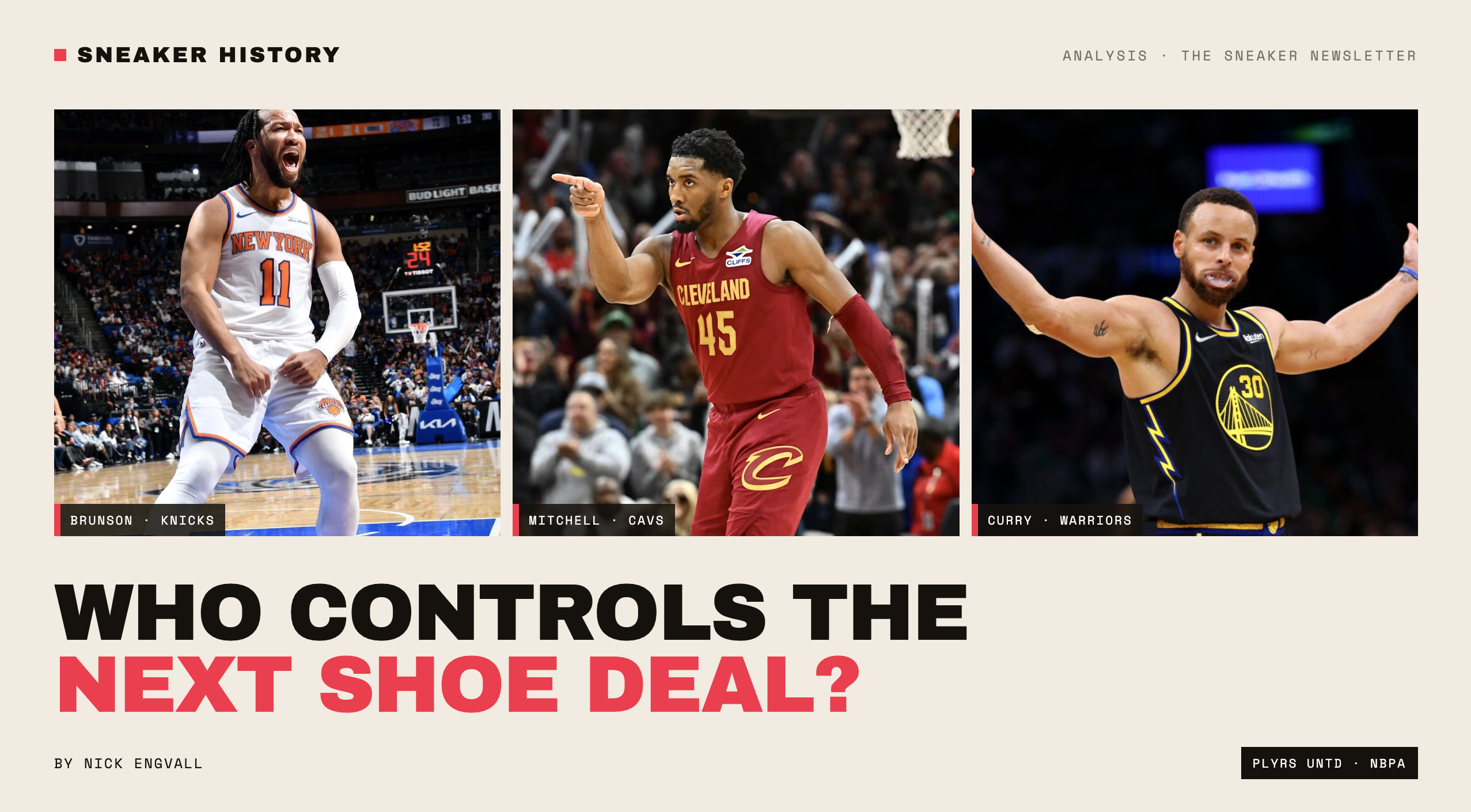
What PLYRS UNTD could change
The NBA Players Association launched PLYRS UNTD this week, a new consumer-facing commercial brand that replaces Think450, the union’s previous business-to-business licensing arm. The stated goal is to build equity around the collective influence of over 500 NBA players, not just license their group rights to companies and step back, but actually build a brand consumers recognize and engage with directly.
I wrote up the business side of this, the leverage shift and the licensing math, over in The Sneaker Newsletter. This is the other half, the part I feel as a fan.
Most of the coverage has focused on the events and content side of the launch, the Plyrs House activations, the Kendrick Lamar-produced campaign, the deal with Enjoy Basketball for original programming. And that’s all real. But the piece that interests me most is what happens to the players who aren’t LeBron or Curry or KD, the mid-tier roster players who are influential within their cities and communities but don’t have the individual commercial infrastructure to build much around that influence on their own.
If PLYRS UNTD succeeds in giving those players a meaningful platform lift, their visibility increases. And when a player’s visibility increases, the shoe on his foot gets seen more. Not just on court, but in content, in activations, in the kind of organic cultural moments that used to drive team colorway demand in the first place.
A rising tide for mid-tier player exposure is a rising tide for the shoes those players wear. And if brands start paying attention to that, the incentive to develop deeper, more specific color stories for non-signature performance models starts to come back. Maybe not in the form of 30 team-specific makeups in the Eastbay catalog, but in something closer to that spirit. Shoes that mean something to a specific city. Colorways that exist because a player and a place have a story worth telling.
The story that got lost
I think about the Kings purple thing a lot more than I probably should. It’s a small example, but it points at something real. The team colorway wasn’t just a retail option. It was a signal that your city’s colors were worth putting on a shoe. That the players representing that city were worth a dedicated colorway story, even if they weren’t signature athletes. Even if nobody outside Sacramento cared.
That signal went quiet in 2018, and the sneaker community mostly moved on. Individual expression replaced collective identity at the shoe level, and the culture followed. Which is fine, mostly. Player creativity is interesting.
But there’s something that got lost in the trade. The Eastbay catalog gave you dozens of ways to feel connected to the team you loved through the shoe on the floor. The current market gives you almost none, unless your team happens to be wearing a signature athlete’s colorway that month.
PLYRS UNTD isn’t going to fix that by itself. The union’s launch is focused on events, content, and collective licensing, not team colorway strategy for non-signature models. But if it succeeds in elevating the visibility and commercial value of the players currently getting overlooked, the brands that dress those players will notice. And when brands notice, colorways follow.
That’s the opening. It’s small. But it’s there, and I’ll be watching to see if anyone takes it.